If Your Roof
Has Rusted Exposed-Fastener Panels
Rust at laps and backed-out screws on a barn or shop point to new standing-seam panels.
Start WithStanding-Seam Replacement

As a State College commercial metal roofing contractor, we install standing-seam steel on farm buildings, shops, warehouses, and flat roofs converted with retrofit framing.
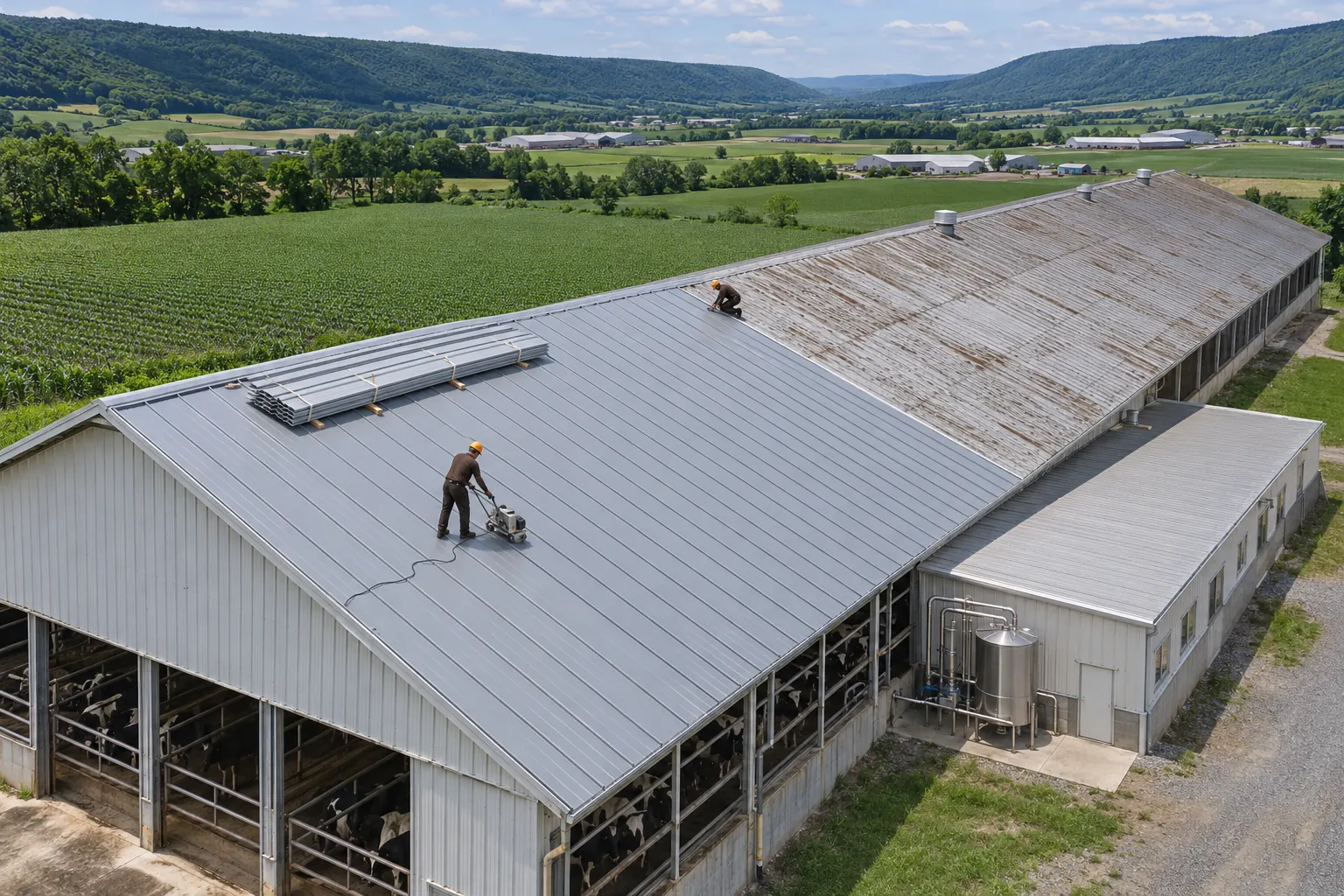
State College commercial metal roofing fits sloped frames and some flat roofs on new framing. These four cases show the usual first step.
Rust at laps and backed-out screws on a barn or shop point to new standing-seam panels.
Retrofit framing over the flat deck adds slope and carries standing-seam panels.
Condensation control and ventilation get planned with the panels so drips stop inside.
Dense equipment on a flat deck flashes better under a welded membrane.
Metal roofs fail at the joints and fasteners first. Here is how each problem shows inside.
Drips that line up in rows across the ceiling follow side laps or fastener lines overhead.
Expansion and contraction loosen screws, and dried washers let water in at every fastener.
Flakes falling inside mean the underside of the panels is corroding, often from condensation.
Rust starts where panels overlap and at the eave ends, where water sits longest.
Moisture on clear, cold mornings points to condensation forming under the roof deck.
Warm, humid air from livestock or equipment condenses on bare steel and drips back down.
Snow that releases all at once can crush gutters and threaten doors below.
Panels without snow retention dump loads onto gutters, entries, and parked equipment.
Loud banging in storms means panels have loosened from purlins or clips.
Fasteners pulled from purlins let panels lift, and the side laps open with each gust.
Metal roofs differ in how panels lock together and how they attach. These are the main choices.
Raised seams and hidden clips keep fasteners out of the weather and let panels move with temperature.
Through-fastened ribbed panels suit simple farm and storage buildings with a plan to service screws.
Light steel framing over a flat deck creates slope for new panels, tied into the existing structure.
Snow retention and heavier eave trim protect gutters, doors, and walkways below the roof edge.
A new metal roof reaches past the building owner.
Send the address and the building use. We will check the panels, fasteners, and framing.
Metal jobs follow this order, from framing checks to the last trim piece.
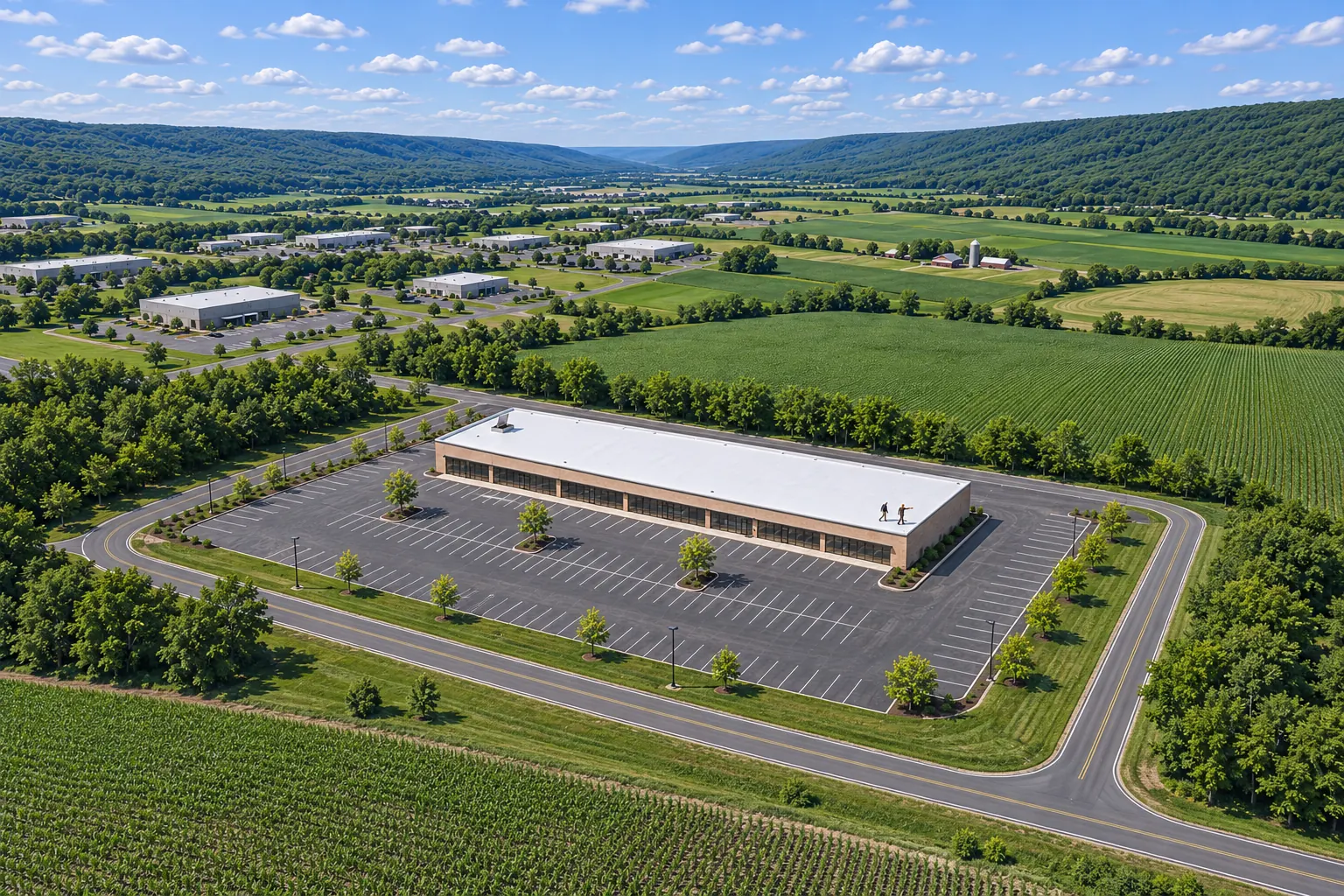
We inspect laps, screws, purlins, and the underside of the panels, and flag spans for an engineer when snow loads matter.
Retrofit framing, insulation, and vapor control get matched to the building use and the slope needed.
Old panels come off one run at a time, and the building below gets covered before each section opens.
Clips go onto the purlins or framing, and panels get seamed together with hidden fasteners.
Ridge caps, eave trim, pipe boots, and snow guards finish the roof before the final walk.
Many metal buildings have flat additions or attached offices.
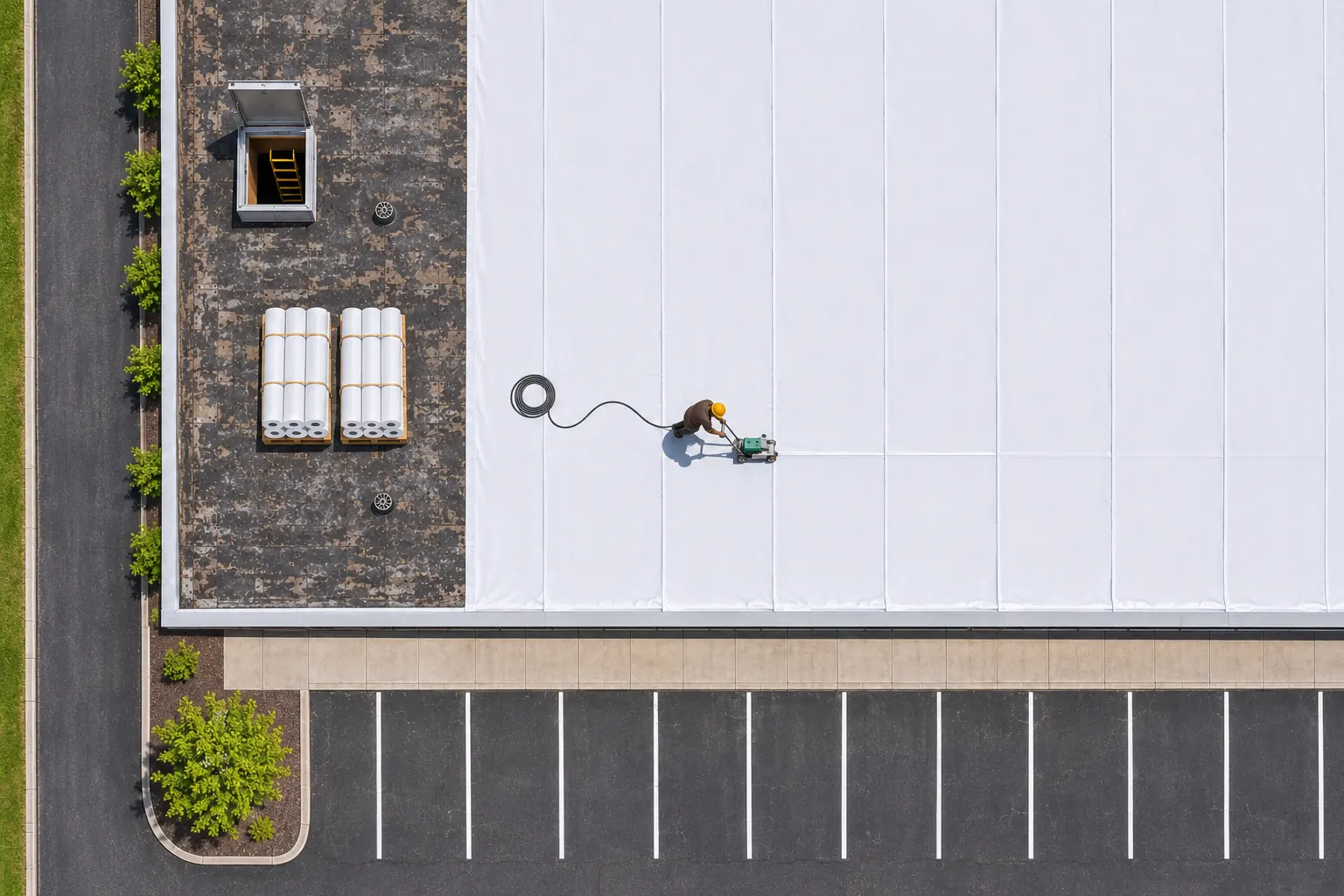
Flat office additions on a shop or barn often get welded TPO tied into the metal at the wall.
TPO Roofing details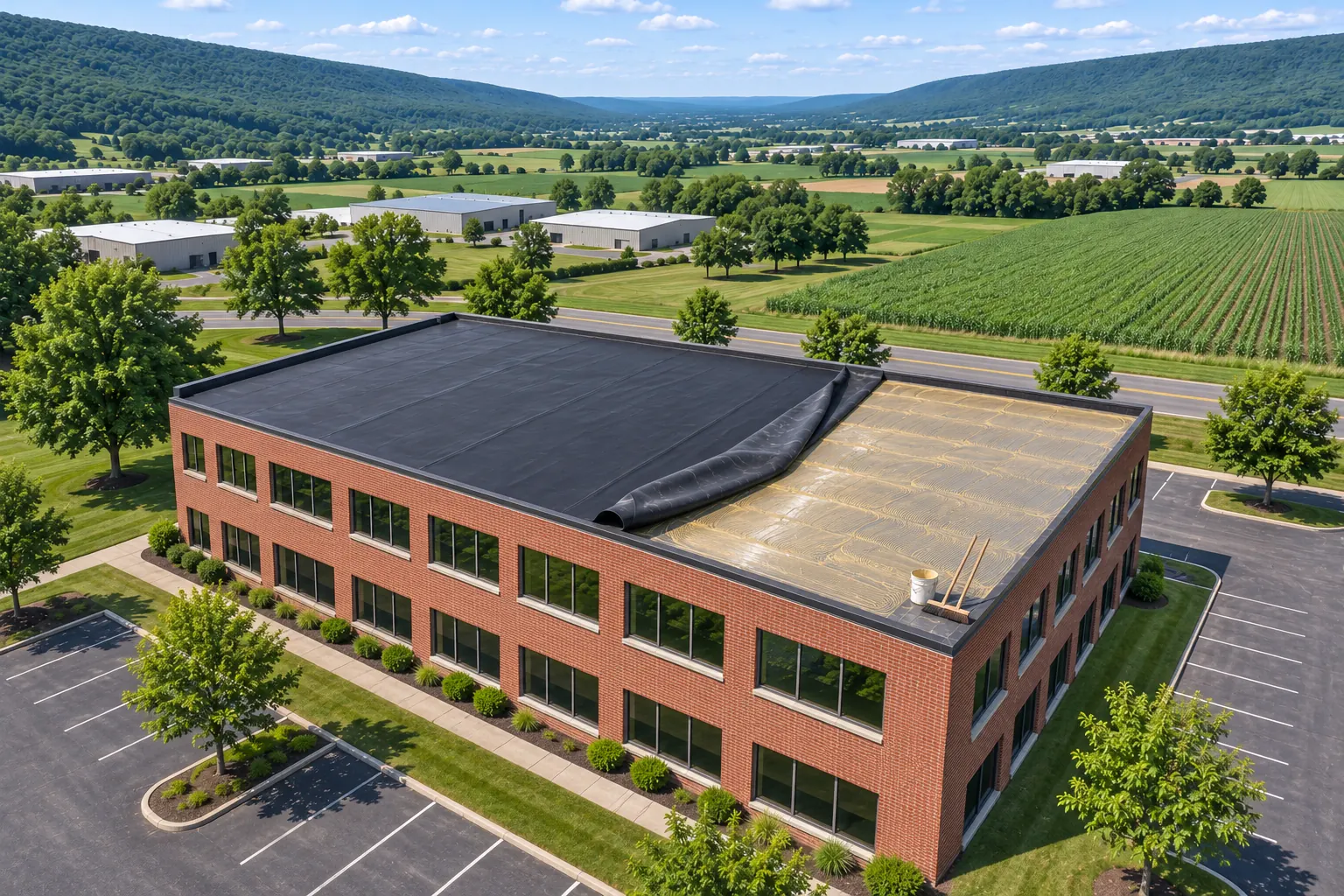
Low flat sections beside a metal building can take EPDM with flashing up the panel wall.
EPDM Roofing details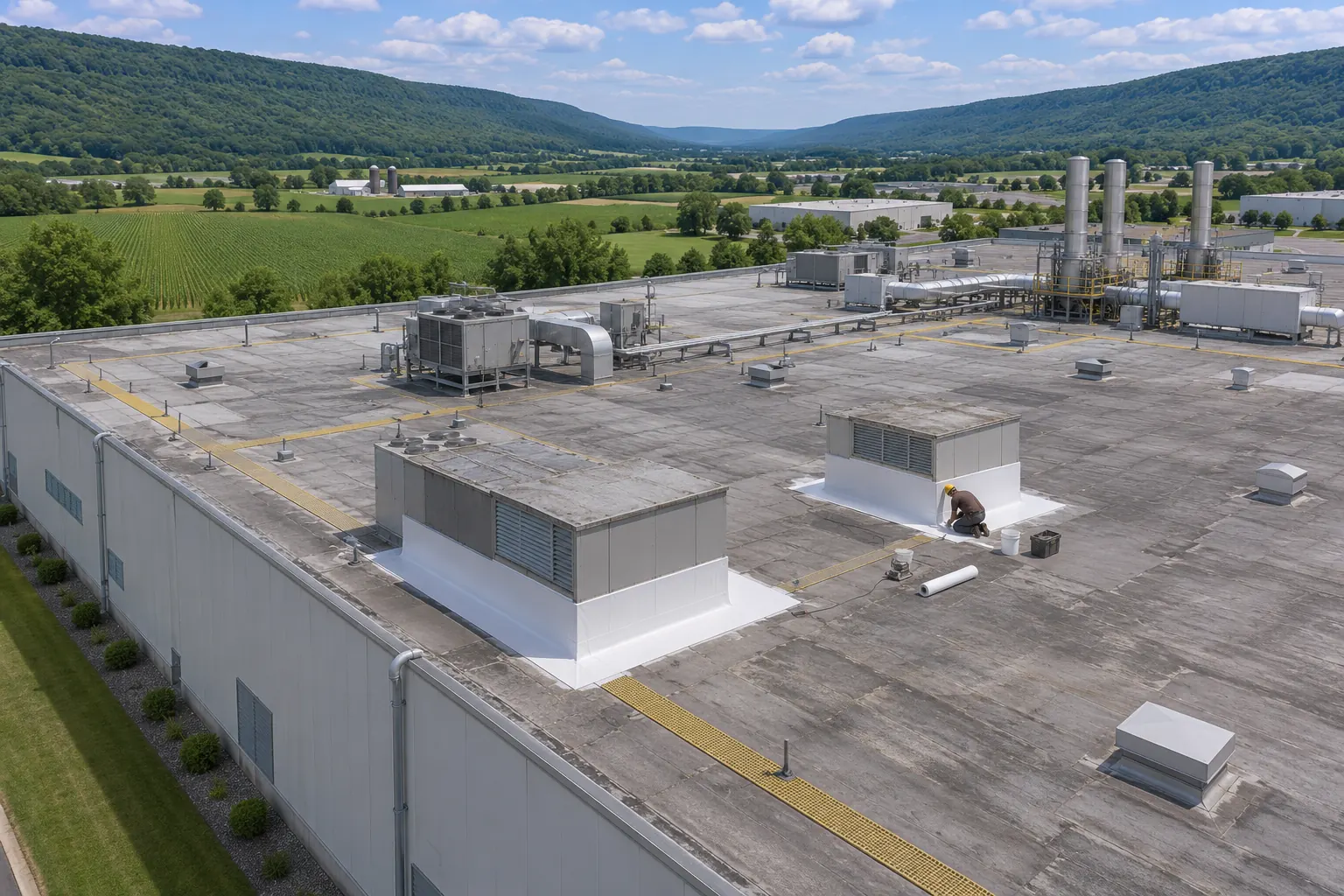
Processing buildings next to farm storage need a roof scope built around their equipment.
Industrial Roofing detailsRetrofit adds framing and support work, so square-foot comparisons only line up once that work is known. The price gets set from roof size, panel system, insulation, tear-off layers, deck repair, edge metal, flashing, equipment, access, staging, and season.
Service life depends on corrosion, fasteners, and moisture inside the building. We check the panels and flashing above and the air conditions below. Barns with humid air and no vapor control wear faster, so the roof plan addresses both sides of the panel.
Panel gauge is one part. The framing and its connections carry the load too. We flag where a structural engineer should review the building before panels get selected, especially on older frames.
It holds the new metal roof at the right slope and carries its loads to the building structure. We review the existing structure, slope, and connections first. Framing also changes the drainage and edges, so it gets designed with the whole roof.
Yes, with condensation control built in. Insulation or a vapor retarder under the panels, plus ventilation for the space below, keeps warm, moist air from reaching cold steel.
Over doors, walkways, gutters, and parking, they usually are. Sliding snow from a metal roof comes off in sheets. Guards get spaced by the roof length and pitch.
Sometimes, with sub-framing or spacers over solid purlins. Rusted fasteners and purlins underneath still need checking, and added weight goes to the engineer on older frames. Where the old panels hide rot or rust through, they come off first.
Gauge and finish follow the span, the snow exposure, and the air inside. Barns with livestock need finishes that resist ammonia and moisture on the underside, while shops and storage buildings have more options. The proposal names both.
Send the address and the building use, and we will check panels and framing.